
ON THE WATER / CRABBING
Why I Like Open-Panel Crab Traps
I’ve tried several ways to catch blue crabs, but most mornings I reach for the square, open-panel traps a friend of mine makes.
They give me a good balance between passive and active involvement. There’s time to relax between checks, but pulling up each trap keeps things interesting—especially when I’m out with my kids.
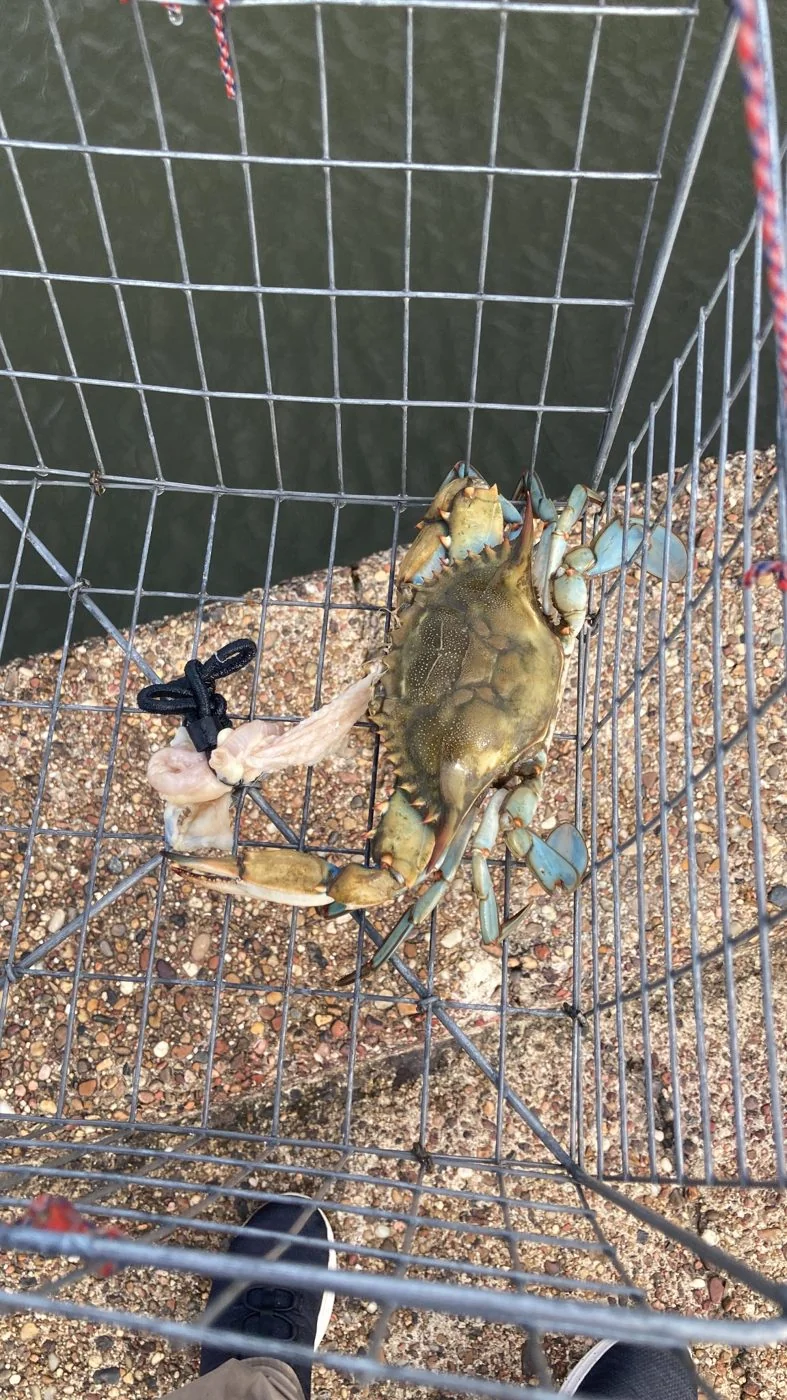
Why I like them
- Very little learning curve. Compared with handlining, they’re straightforward to use.
- No separate net required. Once the trap closes, I can pull the crabs directly out of the water and dump them straight into a bucket.
- Easier to keep the catch. The trap helps contain the crabs during retrieval, including when more than one comes along. They can swim up and out if I don’t pull the trap up fast enough, but usually they decide to hang on to the bait!
- Some built-in weight. The trap’s own weight helps it stay put a little better in current or wind.
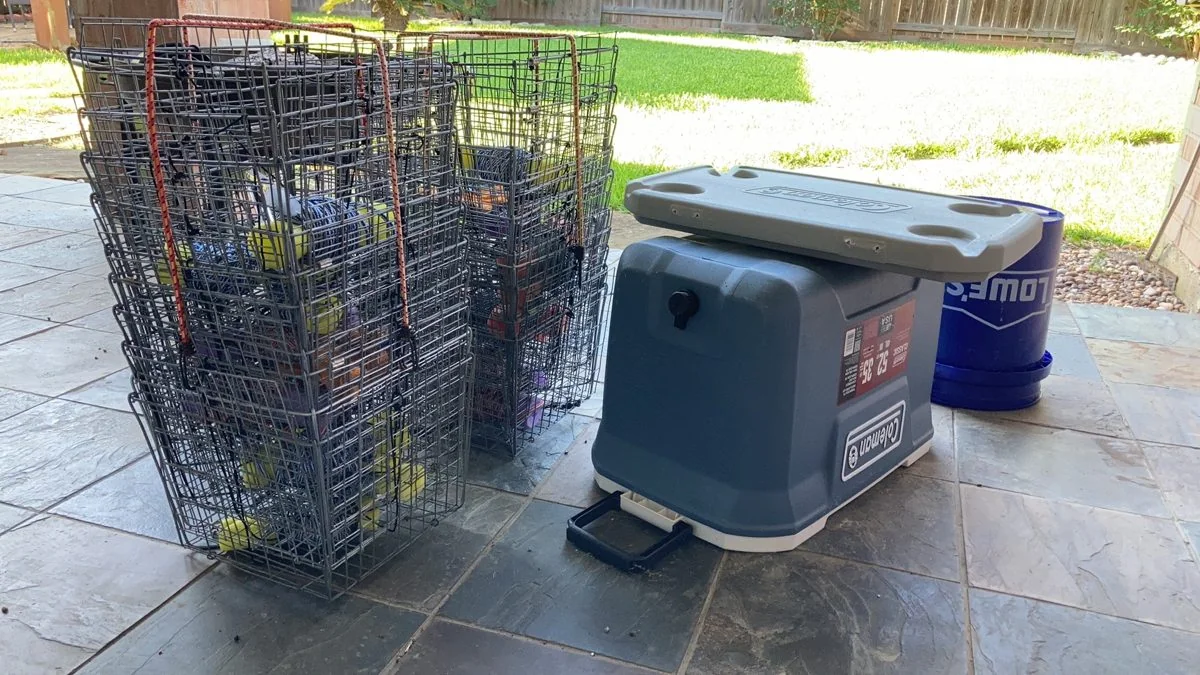
- Easy to stack. The panels fold flat, which makes carrying and storing several traps much easier.
- A handy size reference. On these traps, the short side of each grid opening measures one inch. That makes it easy to get a quick sense of a crab’s size. Texas requires a minimum of five inches, measured from one spine tip to the other across the widest part of the shell. I usually only keep crabs six inches or larger and return most females as well. For anything close to the limit, use a ruler or crab gauge.
Texas also prohibits keeping egg-bearing females or females whose abdominal apron has been removed. See the current regulations before heading out.
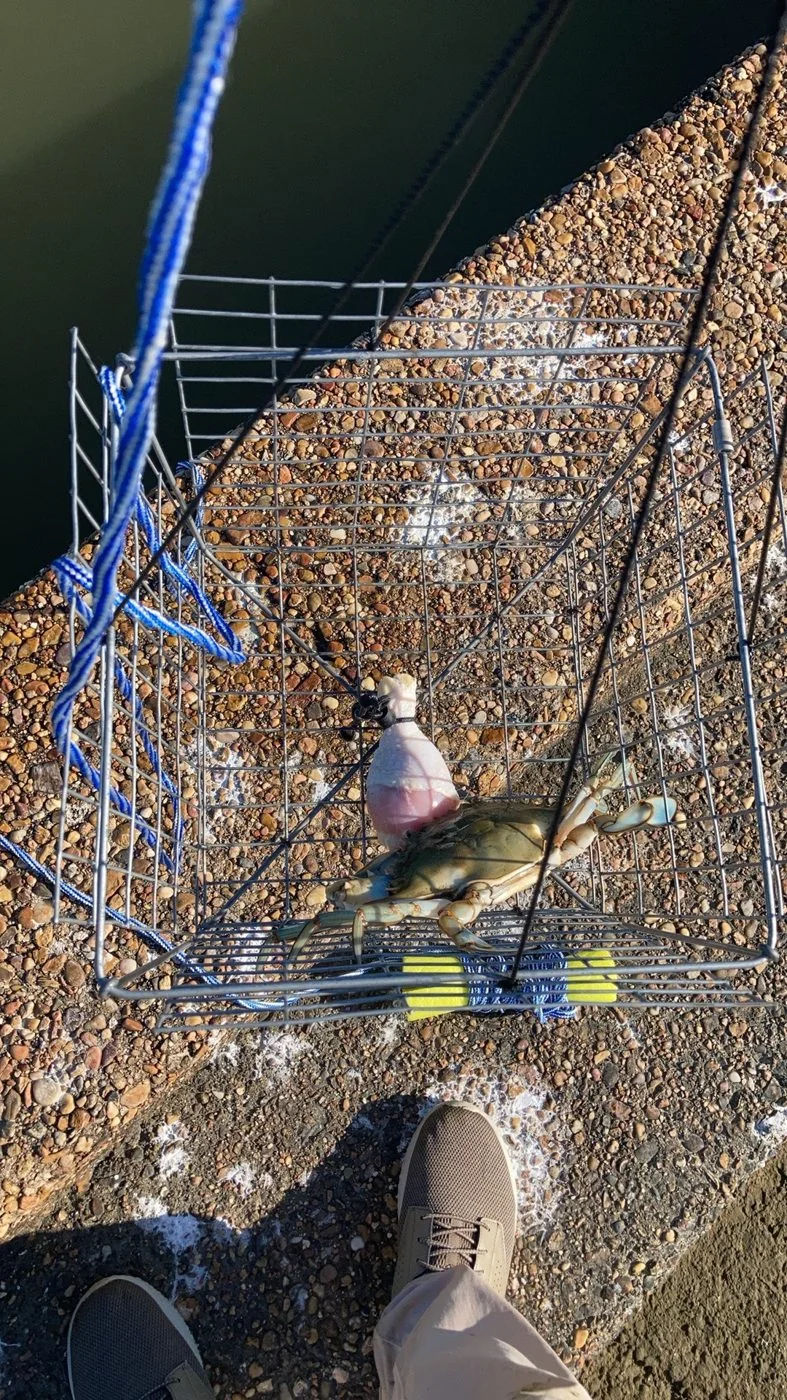
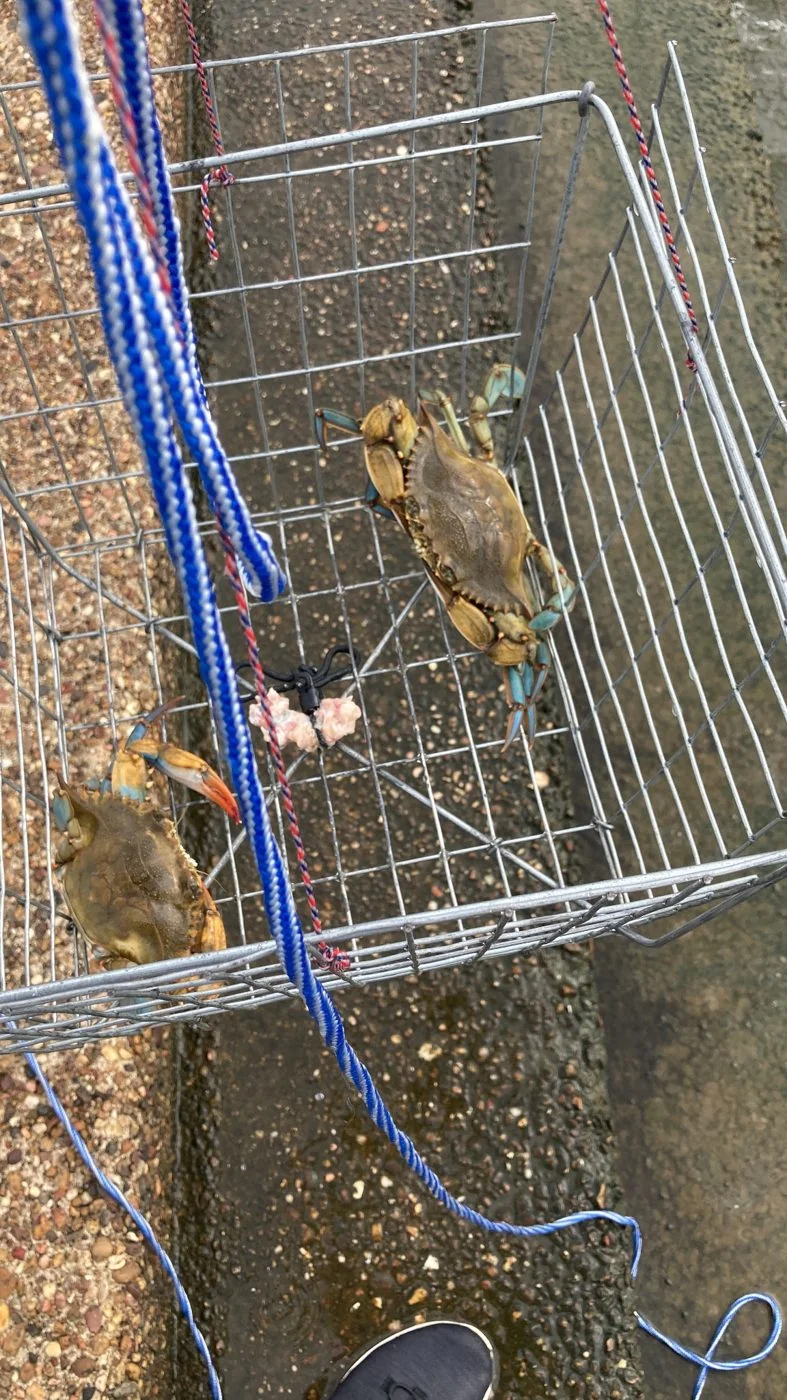
The tradeoffs
- Higher upfront cost. A handline is a cheaper way to get started.
- Less reach. I cannot throw one as far as a handline or castable trap.
- The spot matters. For my setup, I look for at least three or four feet of water and a relatively flat bottom.
No single method works best everywhere. These are some of the other options I have tried or seen along the Texas coast.
Other ways to catch blue crabs
The product examples below include affiliate links. As an Amazon Associate I earn from qualifying purchases.
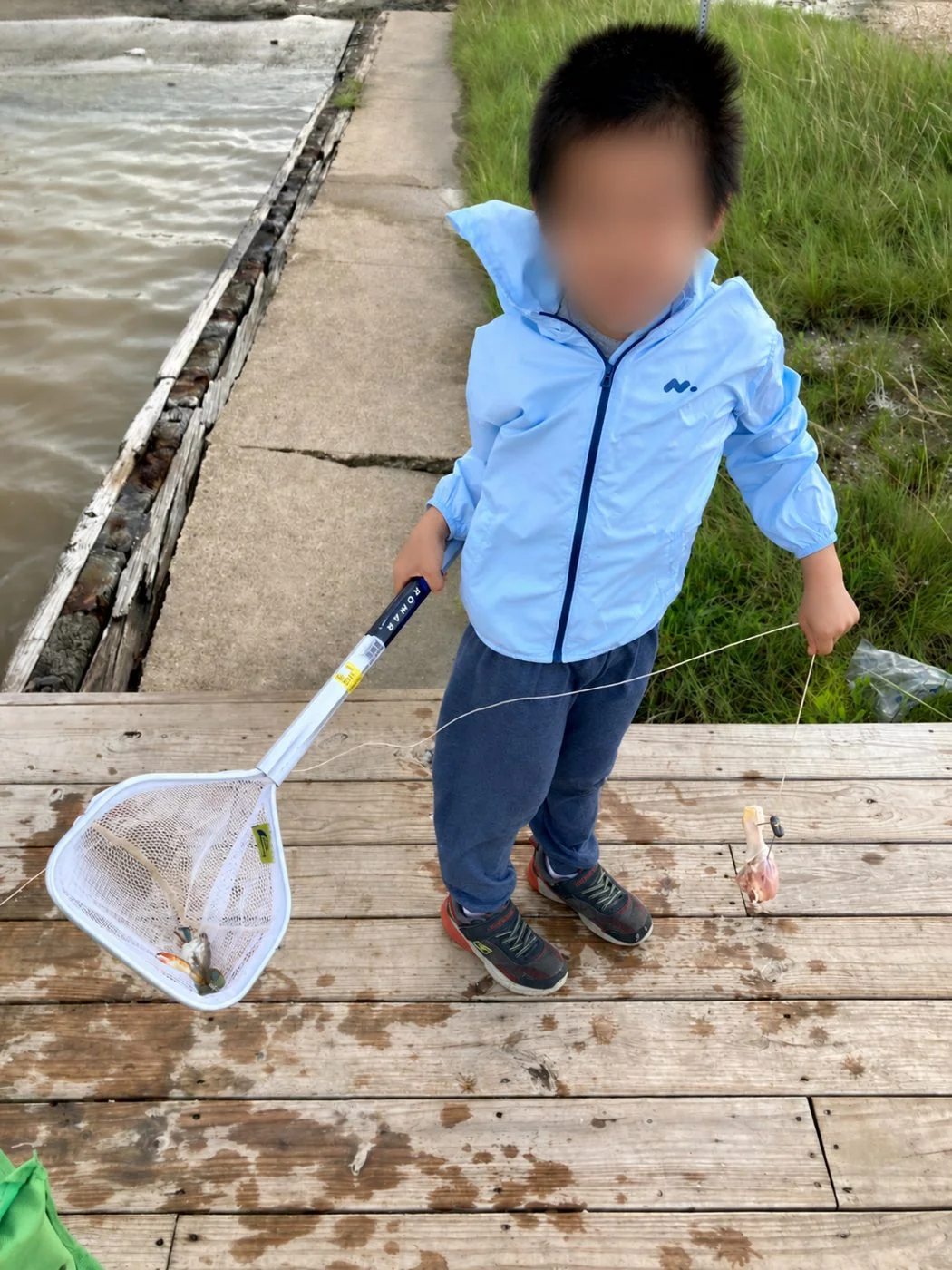
Handline and dip net
This is probably the most versatile method, and it can be remarkably effective in skilled hands. It is inexpensive, easy to carry, and can reach places where I cannot throw a trap. The tradeoff is a steeper learning curve: you have to retrieve the line gently and net the crab before it lets go.
Hoop or ring nets
These can also work well. However, higher-quality versions—such as nets with a metal-grid base and multiple rings—can become fairly expensive. The open-panel box traps I favor are also easier to stack, transport, and store.
Other folding-panel traps
I have tried triangular and half-moon designs, but their opening and closing mechanisms tend to be less reliable. They also cover less bottom area than the box-style traps I use.
Crab snares
These are commonly used for Dungeness crabs, but they are not among the legal crabbing devices listed in the current Texas Parks and Wildlife regulations. Their loops also seem better suited to the heavier appendages of a Dungeness crab than the comparatively slender legs of a blue crab.
CrabHawk and CrabJaw
These castable devices can work well and provide access to deeper water. However, it takes practice to make one land upright and keep it closed reliably during retrieval. They work best with a rod and reel, although I have seen people attach a cord and toss them into deeper water. They also cover less bottom area than an open-panel box trap.
Crab pots
These are enclosed traps that you leave in place for longer periods. Their biggest advantage—and disadvantage—is that they’re passive. You can leave one working while you fish or do something else, but there’s less to do between checks. On a trip of only four to six hours, I often find them less productive than actively checking open-panel traps. Crab pots also have separate construction and tagging requirements in Texas.
Every method has its place. For the kind of crabbing I usually do, especially with kids, the open-panel box trap gives me the best balance of simplicity, reliability, and active involvement.
The traps I use
The square, open-panel traps shown in my photos are made by a friend of mine and sold as EZ Crabbing.