
Family / Books
Why we keep creating books
Max recently asked me why we keep making books that no one reads. Fair question. Most of the time, I end up paying to have author copies printed and shipped. We keep one on our bookshelf and share the rest with friends and family.
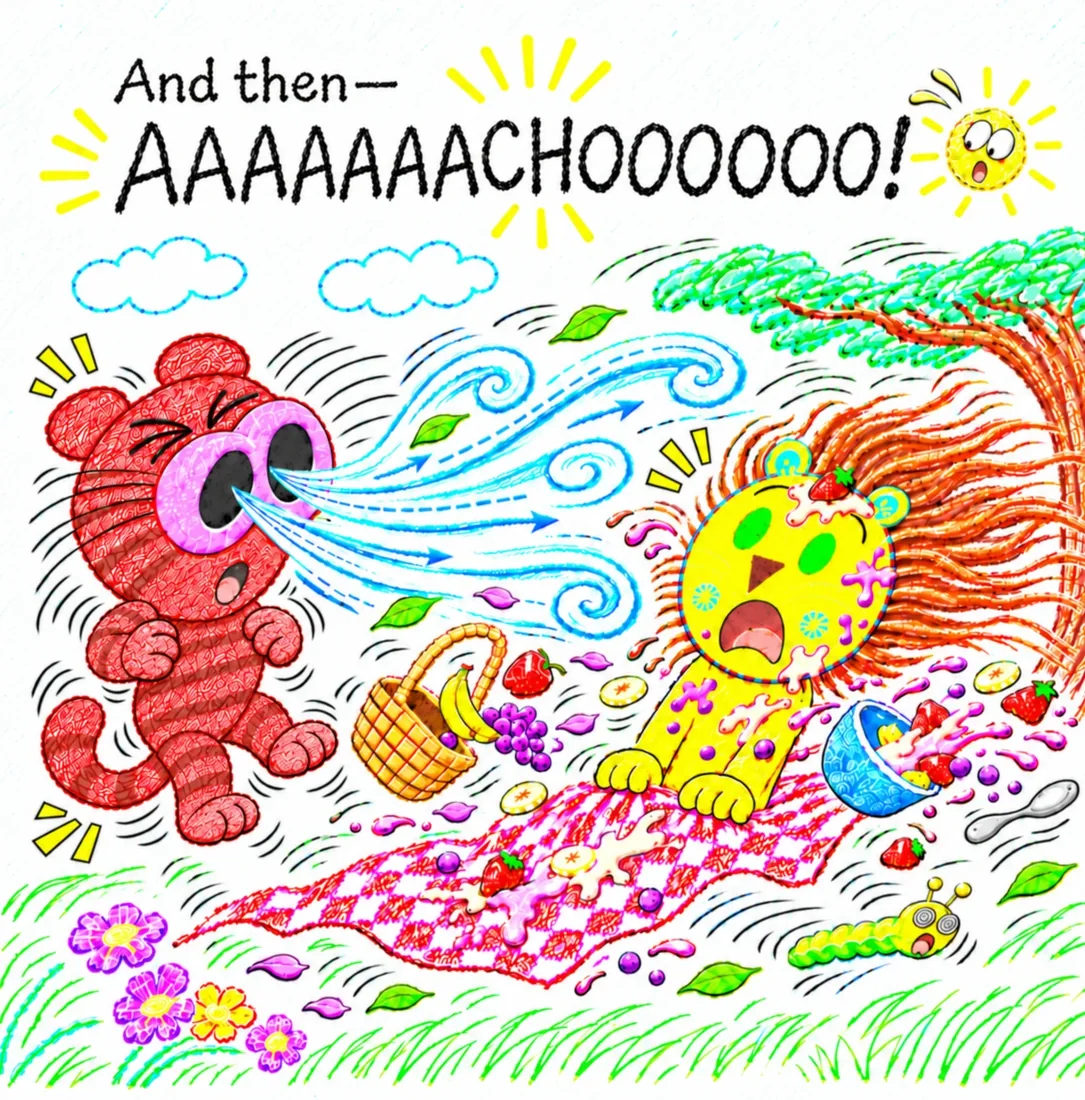
For me, making books is part catharsis, part play, and part teaching. After a long day at work, it feels good to sit down and make something. Some nights I’m trying to put into words a story I’ve carried for years. Other nights I’m trying to figure out what a tiger’s face should look like right before he sneezes. I can get equally absorbed in either one.
That’s something I recognize in Susan Magsamen and Ivy Ross’s Your Brain on Art. Making something can feel restorative and meaningful even when what you make is pretty ordinary. Sometimes writing helps me work through something I’ve been thinking about for years. Sometimes a good laugh with the kids is enough to take my mind off a stressful day.
Making books also gives us a fun reason to explore things we might never sit down to study together. A story about their mom gets us talking about what a cancer epidemiologist does. A story about a tiger with a bad habit gets us thinking about how a friend can tell you something you need to hear without making you feel worse.
Creating a story together is also a form of imaginative play. Research on pretend play suggests it may help children develop executive function. What would Lion do if Tiger sneezed all over his picnic? What could Lily say that would actually help? As we play with those ideas, we keep track of what’s already happened, try seeing things from another character’s point of view, and sometimes set aside a joke we love because it doesn’t fit. It’s a fun way to practice using working memory, cognitive flexibility, and inhibitory control without ever having to call them that.
I also like that Max and Mia get to see how much time and effort goes into a page that takes a few seconds to read. We try a line, read it aloud, and try it again. Sometimes the joke needs a different word. Sometimes it needs one small change in the tiger’s expression. It can take several tries just to figure out which detail is throwing the page off. I’m learning to pay closer attention right alongside them.
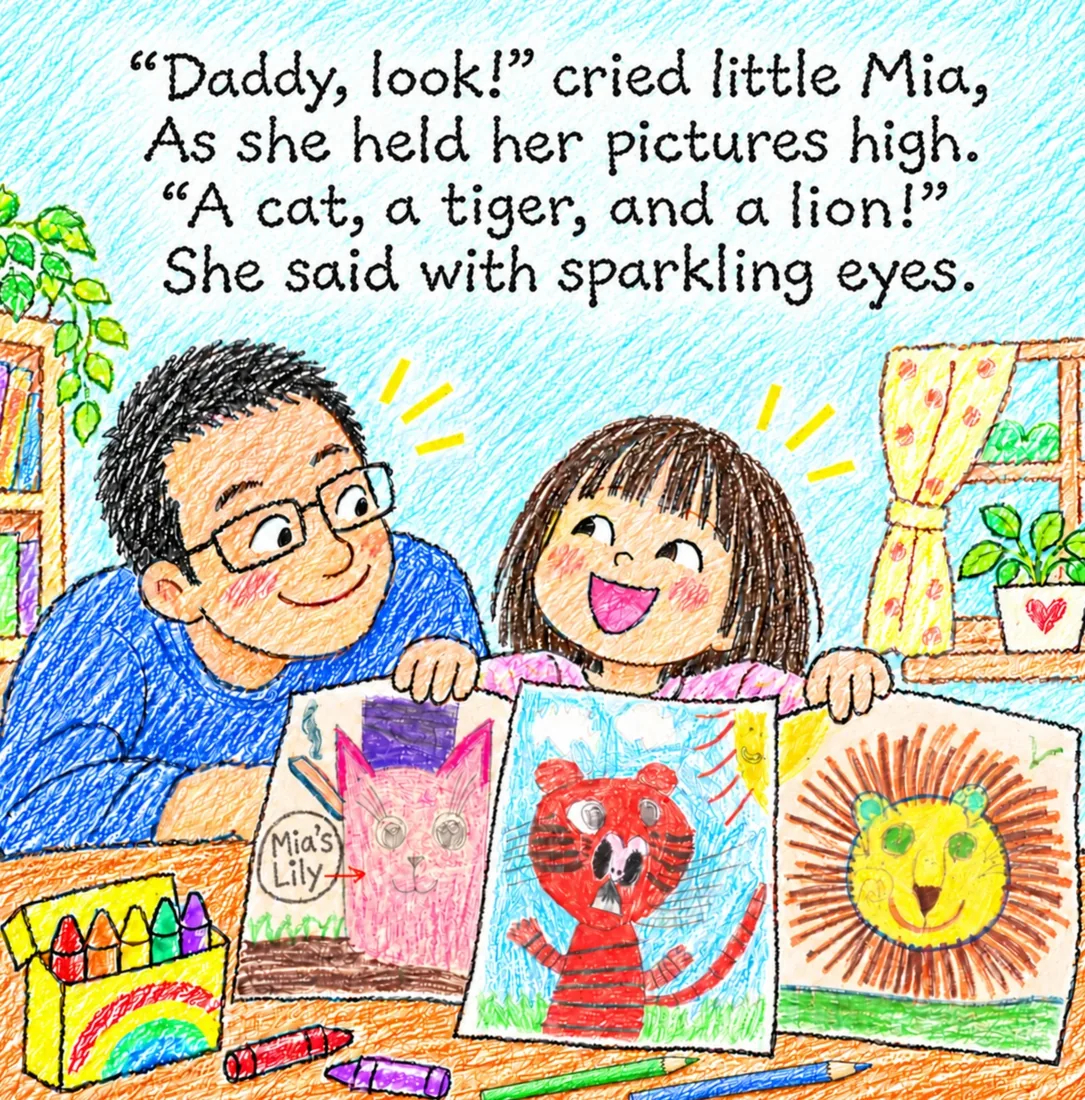
The books keep a little record of our family, too. Slow Magic began with a dream Max told me about one morning. It was a very rough first effort, but it taught me how Amazon Kindle Direct Publishing works. He and I then made My Mom Is a Disease Detective as a birthday gift for my wife. The Tiger Who Picked His Nose grew out of Mia’s drawings. I’m glad her tiger is there at the beginning. Years from now, I’ll get to see how she drew at five and remember the kind of joke that made her laugh.
The Center of My Life was inspired by a grandmother who wanted to learn Braille so she could keep reading to her autistic grandson. As a retina specialist, I spend a lot of time explaining macular degeneration. Writing this book made me think about what I’d want a reader to understand about losing vision. For this grandmother, being able to keep reading to her grandson was one of the things that mattered most.

So, Max, I’ll probably keep paying for printing and shipping. I like having something tangible we made that I can share with someone. And when I pull Mia’s tiger book off the shelf years from now, I suspect I’ll still remember how much time we spent getting that sneeze right.
Further reading
- Adele Diamond, Executive Functions (2013). Diamond explains three core executive functions. Those are the skills we use when we keep track of the plot, try another point of view, or resist adding one more joke.
- Thibodeau and colleagues on imaginative play (2016). Preschoolers who took part in five weeks of structured pretend play improved on executive function measures in this randomized study.
Books mentioned
As an Amazon Associate I earn from qualifying purchases. I also receive author royalties on the books I wrote or co-wrote.
- Susan Magsamen and Ivy Ross, Your Brain on Art (paid link)
- Henry Lin and Maximus Lin, Slow Magic (paid link)
- Maximus Lin and Henry Lin, My Mom Is a Disease Detective (paid link)
- Mia and Henry Lin, The Tiger Who Picked His Nose (paid link)
- Henry Lin, The Center of My Life (paid link)