
FAMILY / EVERYDAY EXPERIMENTS
A Bigger Cup,
a Few Small Wins
A year ago, my wife brought our son a Gengar Pokémon cup from Japan. He was more into Pokémon then, and it was a fun souvenir that became part of his daily routine.
It also held only 8 fl oz.
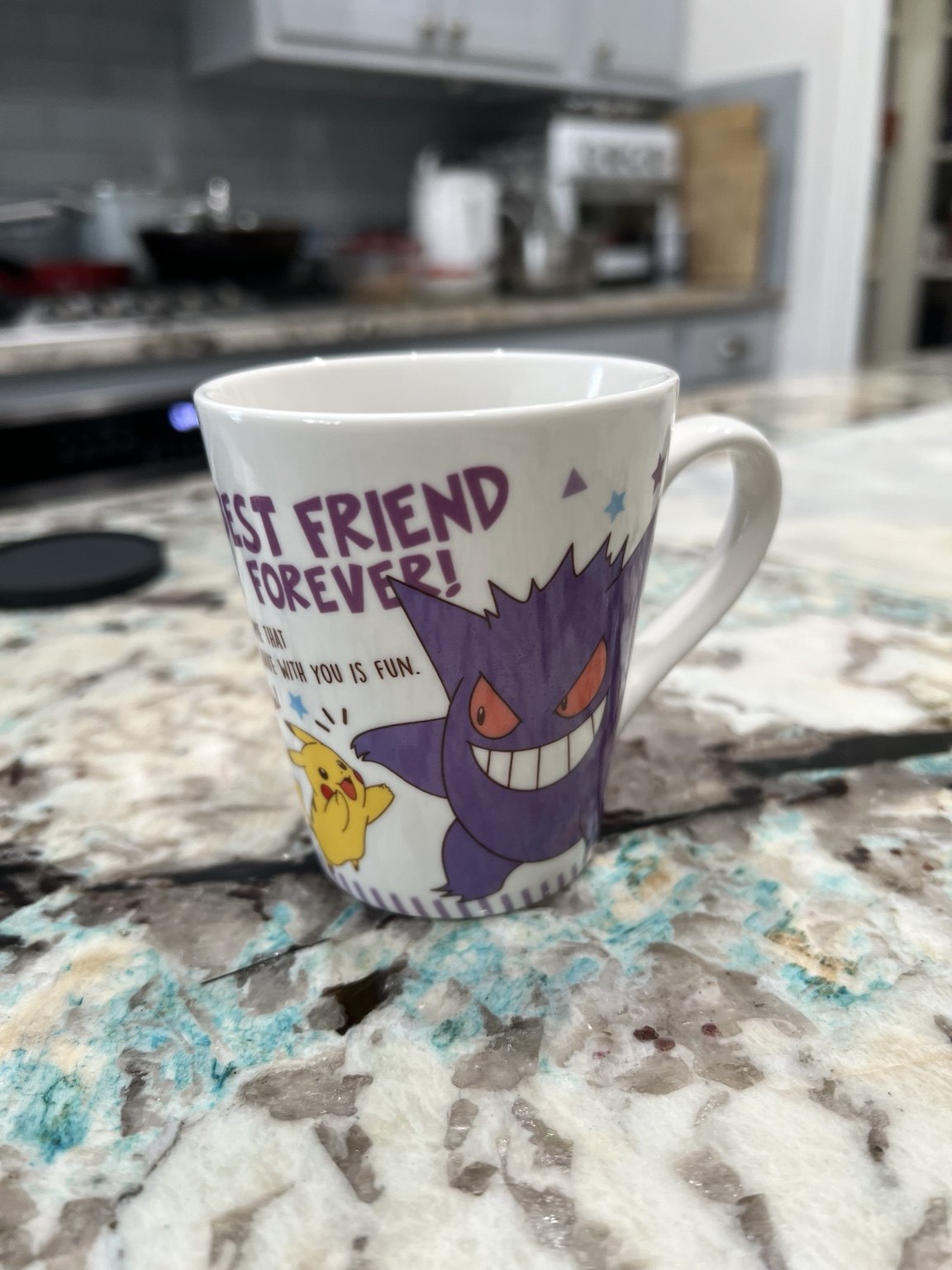
Over time, I noticed he was drinking less milk. Once he finished his cup, he had to ask for more. Sometimes he did, but more often, that first cup was all he drank.
Growth has been a topic of conversation in our home. We’ve talked about how genetics strongly influences height, a finding supported by twin studies.[4] Pediatricians sometimes use “mid-parental height”—an estimate based on both biological parents’ heights—as a rough guide to adult height, with a wide range of possible outcomes.[5] We’re focusing on supporting healthy growth through adequate sleep, balanced nutrition, and regular physical activity. For my 8-year-old son, who loves sports, milk is an important part of a good diet.
The smaller cup seemed to be inadvertently nudging him toward drinking less, so I decided we needed to change back to a larger one. He selected a 15-fl-oz Minecraft periodic table cup. It cost more than I would normally spend on a cup, but to me, it was a worthwhile investment.

First, Minecraft matched his current interests. Second, the design gave us a reason to revisit the periodic table. And third—the reason I started looking in the first place—a larger cup would let me offer more milk without making him ask for a refill.
The portion-size effect describes how the amount we’re served can influence how much we consume. Research has found that larger portions can increase intake, including in children.[1],[2]
In our case, I was also removing a small extra step: asking for more. Related research suggests that making food easier to reach can influence whether people consume it.[3] Asking for a refill is a different situation, but I suspected a similar principle was at work: a small inconvenience could turn “I could have more” into “I’m done.”
So far, he’s been drinking more milk at breakfast and dinner. I can’t separate the effect of the larger serving from the appeal of Minecraft, choosing the cup himself, or simply having something new. This is one family’s experience, not a controlled experiment.
What I like about this little change is the possibility of several small wins at once: connecting with a current interest, opening a conversation about science, and making an intended behavior a little easier.
Of course, his little sister has now asked for the Gengar cup. Time for the next family experiment!
The mugs in our story
As an Amazon Associate I earn from qualifying purchases. Purchases through this link may earn me a commission at no additional cost to you.
Minecraft periodic table mug on Amazon ↗ (paid link)
Gengar & Pikachu “Best Friend Forever” mug · Yahoo! Shopping Japan ↗
T’s Factory model PM-5524619PG. Non-affiliate link to a Japanese-language listing; it showed out of stock when checked on November 6, 2026. International shipping has not been verified.
References
- Hollands GJ, et al. Portion, package or tableware size for changing selection and consumption of food, alcohol and tobacco. Cochrane Database of Systematic Reviews. 2015;9:CD011045.
- Smethers AD, et al. Portion size has sustained effects over 5 days in preschool children: a randomized trial. American Journal of Clinical Nutrition. 2019;109(5):1361–1372.
- Hunter JA, Hollands GJ, Couturier DL, Marteau TM. Effect of snack-food proximity on intake in general population samples with higher and lower cognitive resource. Appetite. 2018;121:337–347.
- Silventoinen K, et al. Heritability of adult body height: a comparative study of twin cohorts in eight countries. Twin Research. 2003;6(5):399–408.
- American Academy of Pediatrics. How Tall Will My Child Be? Predicting a Child’s Adult Height. HealthyChildren.org.